

Horizon Fitness is focused on making structured cardio training more accessible for everyday use. It specializes in indoor workout machines designed to support consistent physical activity at home, particularly if you prefer flexible, self-directed workouts.
The brand’s product range centers on treadmills, ellipticals, and stationary bikes, with multiple series developed to accommodate varying workout intensities. It focuses on helping you maintain workout variety, follow guided sessions, or track performance.
In this review, we will explore Horizon Fitness in detail by examining its overall product range, key brand advantages, and how it compares with similar home-fitness brands. We will also assess the brand’s reputation to help you better understand its strengths, limitations, and value.
According to the official website, Horizon Fitness designs exercise machines intended for walking, running, cycling, and low-impact conditioning. Its product portfolio centers on treadmills, exercise bikes, ellipticals, and fitness accessories.
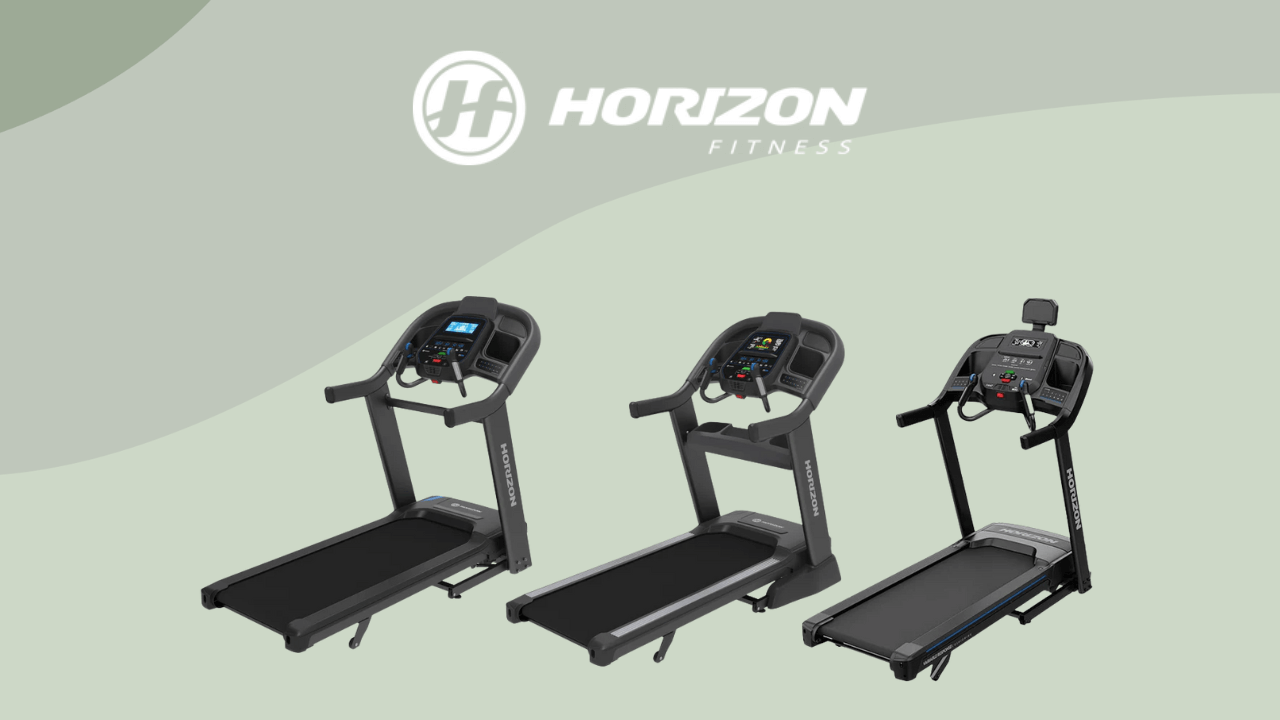
The brand features Treadmills offered across multiple series to address different usage levels. The Studio Series focuses on higher performance, featuring wider running decks, stronger motors, higher incline ranges, and enhanced Bluetooth connectivity. The GO Series emphasizes accessibility, with simpler controls and compact folding frames.
In the cycling category, the brand offers indoor cycles, upright bikes, and recumbent bikes. Indoor cycles such as the 5.0 IC and 7.0 IC are built for higher-intensity workouts, while upright and recumbent models focus on comfort-driven design, including step-through frames, lumbar support, and adjustable seating for lower-impact training. Ellipticals extend the lineup if you are seeking joint-friendly cardio alternatives.
As per the makers, the brand emphasizes open connectivity rather than proprietary ecosystems. Most machines support Bluetooth-enabled data sharing, heart-rate monitoring, and compatibility with third-party fitness apps, allowing you to train with external platforms instead of relying on built-in subscription programs.
Horizon Fitness also maintains a smaller accessories category that includes fitness mats, maintenance kits, heart-rate chest straps, benches, and dumbbell sets. These products function as additions rather than a full strength-training system.
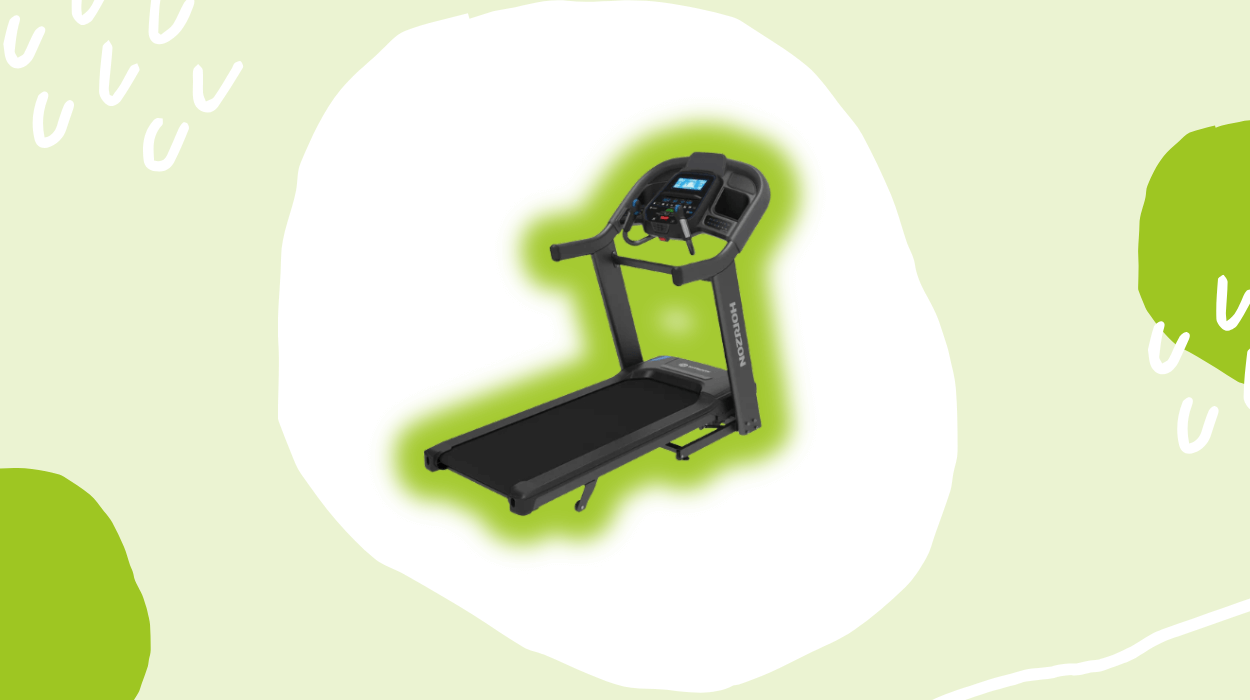
The 7.4 AT Treadmill is built using a combination of structural components, cushioning materials, and digital systems that influence how your body experiences repeated running impact. Its extra-wide 22 x 60-inch running deck provides stable foot placement, which can help reduce compensatory movement patterns that often occur when stride space feels restricted. Adequate lateral room allows your hips and knees to track more naturally during longer sessions, supporting smoother gait mechanics over time.
As per the official website, the deck combines 3-Zone Variable Response Cushioning with a 1.6 mm silicone layer. Silicone-based cushioning absorbs and redistributes ground reaction forces generated with each foot strike. This may help reduce peak stress transmitted to the ankle, knee, and hip joints, particularly during heel contact. Firmer zones at the push-off area support propulsion, while softer zones in the landing area may reduce repetitive micro-impact on connective tissues such as tendons and cartilage.
7.4 AT Treadmill features Bluetooth FTMS connectivity, which allows integration with external apps and heart rate monitoring through a chest strap. Chest-based sensors measure electrical signals produced by cardiac muscle contractions, offering more consistent heart rate data compared to optical wrist tracking. This can help you observe how your cardiovascular system responds to workload changes, recovery periods, and sustained endurance efforts.
The FeatherLight hydraulic folding system in this machine is designed for storage efficiency without altering deck integrity. The hydraulic mechanism controls descent speed, reducing strain on joints and hands during setup and minimizing mechanical stress on the frame when lowering the deck after workouts.
The 7.8 AT Treadmill could support repeated high-intensity running across different users. The running deck can influence how stress is absorbed by joints, tendons, and connective tissue over repeated loading cycles.
According to the official website, a heavy-duty frame supported with aluminum side rails contributes to lateral stability during faster movements. Reduced deck flex and vibration can limit excessive activation of stabilizing muscles in the hips and core. This may allow working muscles such as the quadriceps, hamstrings, and gluteal groups to contribute more directly to force production rather than balance correction, particularly during incline or tempo running.
The machine features QuickDial speed and incline controls that allow rapid mechanical adjustments during movement. Faster transitions between workloads can influence cardiovascular demand by triggering quick changes in heart rate, oxygen delivery, and muscle fiber recruitment.
The treadmill includes integrated media controls and speakers that allow adjustments without interrupting movement. Minimizing hand repositioning during running may help preserve upper-body posture and reduce unnecessary trunk rotation, which can otherwise increase energy expenditure during longer or faster sessions.
As per the official website, the T101 Connect treadmill combines a mechanical structure to support walking, jogging, and light running routines. The brand highlights that speed and incline in T101 Connect can be adjusted using one-touch keys or intuitive dial controls. These controls allow rapid workload changes that alter muscular demand.
The machine's Bluetooth FTMS enables direct syncing with apps such as Peloton, JRNY, Zwift, and atZone. App-guided workouts often introduce structured pacing, interval cues, or scenic movement patterns that influence heart rate fluctuations and breathing rhythm.
The treadmill includes integrated speakers for streaming media and workout audio directly from connected devices. An eye-level tablet holder supports phone or tablet placement, which may help limit forward head posture.
The optional atZone app with T101 Connect provides guided workout classes and scenic routes using HD footage. While visual environments do not change mechanical output, sensory engagement can influence perceived exertion, which may affect how long you maintain movement and how consistently sessions are completed.
The T202 Treadmill features a 20 x 60-inch running surface that provides extended stride length compared to shorter decks, allowing more natural hip extension during faster movement. Adequate deck length can reduce stride truncation, which may otherwise increase stress on the knees and lower back.
The running platform uses 3-Zone Variable Response Cushioning with a 1.4 mm silicone layer and an 18 mm deck thickness. Silicone-based cushioning absorbs part of the impact force generated at foot strike, influencing how load is transferred through the calcaneus, tibia, and knee joint. The tapered deck design, measuring 60 mm at the front and 42 mm at the rear, supports progressive force distribution as body weight shifts from landing to toe-off, which may help moderate repetitive joint loading over time.
Horizon Fitness launched in the late 1990s under Johnson Health Tech, a global fitness equipment manufacturer founded in 1975. This connection places the brand within a larger organization that has decades of experience in designing and producing exercise equipment, giving Horizon access to established manufacturing and operational infrastructure.
With more than 25 years of continuous operation, Horizon Fitness has remained focused on the home fitness segment rather than commercial gym equipment. It has maintained a consistent direction, adapting to changing home workout trends while continuing to serve a clearly defined residential audience.
The company primarily specializes in treadmills and indoor cycles designed for everyday home use. Its treadmill lineup includes the Studio Series and Go Series, both aimed at practical, space-conscious cardio options. The brand also features indoor cycling models that follow a similar approach, targeting at-home training without the complexity or size of commercial-grade machines.
Horizon Fitness’s long market presence contributes to its overall brand positioning. Extended time in the industry can indicate product familiarity and operational stability, while backing from Johnson Health Tech may support manufacturing standards, warranty structures, and long-term customer confidence.
Horizon Fitness points to recognition from third-party evaluators such as the Good Design Awards, the Plus X Award, and reviews published by Fitness Professor. These organizations typically assess products based on criteria such as design quality, usability, feature balance, customer satisfaction, and value.
The brand highlights several products associated with these honors. Models including the T101 Treadmill, the 7.0 AT and 7.0 AE Ellipticals, the 5.0 R Recumbent Bike, and the Horizon Bench appear frequently in award listings and expert reviews. These products are primarily aimed at mid-range home users, with a focus on reliability and consistent everyday performance.
According to Horizon Fitness, this award-backed recognition contributes to its brand credibility. This can offer added reassurance that the equipment has been evaluated beyond brand marketing, helping you make a more informed purchase when comparing long-term reliability and everyday usability.
Horizon Fitness does not emphasize building a fully integrated digital training ecosystem. Its equipment supports Bluetooth FTMS connectivity and can pair with third-party platforms such as Peloton Digital and Zwift. However, the brand does not offer its own proprietary workout classes or guided training programs.
The console experience remains largely self-directed. You can adjust speed and incline manually, and structured coaching or immersive workouts depend on external apps rather than built-in software. If you are seeking an all-in-one training system, this setup may feel less cohesive.
In comparison, brands like NordicTrack and DeerRun offer integrated workout environments with trainer-led sessions and adaptive features that respond in real time. This may result in a more limited level of personalization within the training experience.
NordicTrack and Horizon Fitness differ in their underlying approach to home fitness equipment, particularly in how technology, pricing, and user control are integrated into their product ecosystems.
As per their official website, NordicTrack positions its lineup around digitally guided training, with treadmills such as the X24, Commercial 2450, and Ultra 1 designed to operate as part of a broader smart fitness system. Horizon Fitness, in comparison, emphasizes equipment-led performance, with models such as the 7.8 AT, 7.4 AT, 7.0 AT, T202, and T101 Connect that focus on mechanical reliability and direct user control rather than automated training logic.
Product structure reflects this difference clearly. NordicTrack organizes its treadmills into defined series, including the T Series for entry-level use, Commercial Series for higher-speed training, X Series for incline-focused workouts, and the Ultra Series positioned at the premium end of the market. Horizon Fitness maintains a narrower range, dividing its offerings into the Studio Series and GO Series.
The training experience further differentiates the two brands. NordicTrack integrates iFIT as a central component of machine functionality, where treadmills such as the Commercial 2450 and X24 automatically adjust speed, incline, and decline to follow trainer-led workouts. The system includes AI-generated training plans, adaptive intensity adjustments, and optional heart-rate-based control, with full functionality dependent on an active iFIT membership. On the other hand, Horizon Fitness adopts a more open configuration. Models like the 7.0 AT and 7.4 AT support Bluetooth connectivity, speakers, and data sharing with third-party fitness apps, but core treadmill operation does not rely on a proprietary subscription platform.
Incline capability represents another functional distinction. NordicTrack highlights advanced terrain simulation, particularly within its X Series, offering incline levels up to 40% and decline down to -6% to replicate outdoor elevation changes. Horizon Fitness limits incline functionality to practical indoor ranges, with Studio Series treadmills typically offering up to 15% incline and no decline. This reflects a difference between immersive terrain replication and conventional indoor running design.
User interaction methods also vary. NordicTrack emphasizes touchscreen-led navigation and automated session flow, where workout parameters change dynamically based on trainer programming. Horizon Fitness prioritizes tactile usability, promoting features such as QuickDial controls and the Rapid Sync drive system, which are intended to minimize delay during manual speed and incline transitions. This approach favors immediate responsiveness over automated progression.
NordicTrack features subscription-based training, automated adjustments, and guided programming. Meanwhile, Horizon Fitness emphasizes mechanical performance, responsive controls, and flexibility in app usage.
DeerRun builds its lineup around the Q2 Urban Smart Walking Pad (7% incline), Z10 Auto-Incline Walking Pad (12%), and the Z20 suitcase-style foldable treadmill. These products are designed for small apartments, home offices, and daily movement without requiring a dedicated workout room. On the other hand, Horizon Fitness centers its identity on full-size treadmills like the 7.0 AT, 7.4 AT, and 7.8 AT, which are engineered to replicate a gym-style running experience rather than casual walking or under-desk use.
The size and structure of the equipment further separate the two brands. DeerRun prioritizes portability through foldable frames, upright storage, wheels, and ultra-compact footprints, as seen in models like the Z20 Foldable Walking Pad that stores like a suitcase. Horizon Fitness, however, emphasizes stability and running space, offering extended decks such as the 20” × 60” deck on the 7.0 AT and the extra-wide 22” × 60” deck on the 7.4 AT. This makes Horizon treadmills better suited for continuous jogging and running, while DeerRun models remain optimized for space efficiency.
Their performance focus also differs clearly. DeerRun treadmills typically support walking to moderate running speeds, with higher-end models like the X20 Full Running Deck Treadmill reaching up to 11.3 mph and supporting up to 400 lbs. Horizon Fitness standardizes higher performance benchmarks across its AT series, offering 0–12 mph speed ranges combined with 0–15% incline, supported by its Rapid Sync Drive motor system designed to minimize lag during speed transitions.
Technology integration follows two different philosophies. DeerRun connects its machines to the PitPat fitness app, which focuses on gamified challenges, daily activity tracking, and community engagement. Some newer models, including the A6 Plus and A1 Pro Move+, also include NFC support and upgraded chips. Meanwhile, Horizon Fitness takes an open-platform approach through its Connected Tech system, allowing treadmills like the 7.0 AT to sync with Apple Watch, third-party fitness apps, Bluetooth speakers, and on-demand classes without locking users into a single ecosystem.
Pricing places the brands in different segments. DeerRun positions itself firmly in the budget-to-mid range, with walking pads and foldable treadmills commonly priced between about $169 and $329, including models like the Z20 or A6 Plus. Horizon Fitness operates in the premium category, with the 7.0 AT priced around $1,099 and higher-end models such as the 7.8 AT reaching close to $1,999, reflecting their heavier frames, larger decks, and long-term durability focus.
DeerRun maintains an extensive catalog of lifestyle accessories, including treadmill desks, remote controls, fans, mats, smart scales, and compact workout tools designed to complement daily movement routines. Horizon Fitness offers a smaller, utility-focused accessory range, such as fitness mats, lubricant kits, heart rate straps, benches, and dumbbells, aligning more closely with traditional home gym setups.
DeerRun focuses on affordability, portability, and daily movement integration to serve modern, space-limited homes. On the other hand, Horizon Fitness positions itself around structured training, durability, and gym-grade performance.
To evaluate Horizon Fitness, we analyzed customer feedback published on Trustpilot throughout 2025 and early 2026, where it holds a 3.8 rating based on more than 3,500 reviews. Many users have praised the accessible website, clear product selection, and a generally smooth checkout process. Several customers noticed that financing options and warranty add-ons were easy to understand, which contributed to confidence during the ordering stage. However, some customers noticed challenges once orders moved into fulfillment. Many users claimed delivery timelines were inconsistent, with frequent references to delayed scheduling, last-minute cancellations, or limited communication from third-party carriers. A few customers reported professional installations, while others noted incomplete assembly, missing parts, or equipment being left without confirmation or testing.
When assessing customer support, many users claimed response times were slow, and follow-up was inconsistent. Several also noticed difficulties reaching departments authorized to resolve technical or warranty-related concerns. User reviews frequently reference extended waiting periods for technician scheduling, replacement parts, or even basic acknowledgment of submitted service tickets. In some cases, customers mentioned feeling that responsibility for mechanical issues was redirected rather than clearly addressed.
On the other hand, some customers noticed early mechanical or functional issues such as belt misalignment, abnormal noise, console instability, resistance failures, or software errors. At the same time, a few users also reported stable performance when units functioned correctly, particularly for walking or moderate running, indicating variability in unit consistency rather than uniform product failure.
Horizon Fitness operates under Johnson Health Tech, and its portfolio primarily focuses on home-use cardio equipment, including treadmills, ellipticals, and exercise bikes. The brand claims to feature designs oriented toward space efficiency and simplified digital features rather than commercial-grade systems.
Currently, Horizon Fitness does not maintain a standalone BBB profile. However, its parent company, Johnson Health Tech, is listed with the BBB and currently holds a B rating. According to BBB records, the parent company has logged several customer complaints over the past three years, which are largely related to service and repair delays, warranty interpretation, recall handling, and delivery coordination across multiple brands under the corporate umbrella. While many cases show documented business responses, the volume and recurring themes provide contextual insight into post-purchase support patterns that may be relevant when evaluating Horizon Fitness as part of the same service infrastructure.
On Tenereteam, Horizon Fitness has a 4.7/5 rating, from 1,752+ ratings, showing strong customer satisfaction. Users like the durable equipment, fair pricing, and no required subscription fees. Some note fewer high-tech features and large machine sizes as minor drawbacks.
Horizon Fitness demonstrates operational stability supported by an experienced parent company and sustained market presence. While aggregated ratings suggest broadly positive user sentiment, the presence of complaints and reduced BBB visibility constrains independent verification of service consistency.
Horizon Fitness claims to support sustainable training by prioritizing functional design over complex digital systems. However, it is essential to understand that the training experience remains largely self-managed. The absence of integrated coaching, adaptive programming, or performance-based feedback means progression depends heavily on your knowledge and discipline.
When considering the brand, being aware of practical precautions might be helpful. Repetitive cardio performed without variation may increase cumulative joint stress over time, particularly in the knees, hips, and ankles.
Horizon Fitness may suit you if you prefer straightforward cardio equipment designed around routine, control, and long-term usability. The brand’s strengths lie in functional design and overall stability, while limited personalization, minimal coaching support, and a more traditional training structure may present drawbacks depending on your workout preferences.

Contact us at [email protected] or follow @leafsnap on Twitter! View our Privacy Policy.