
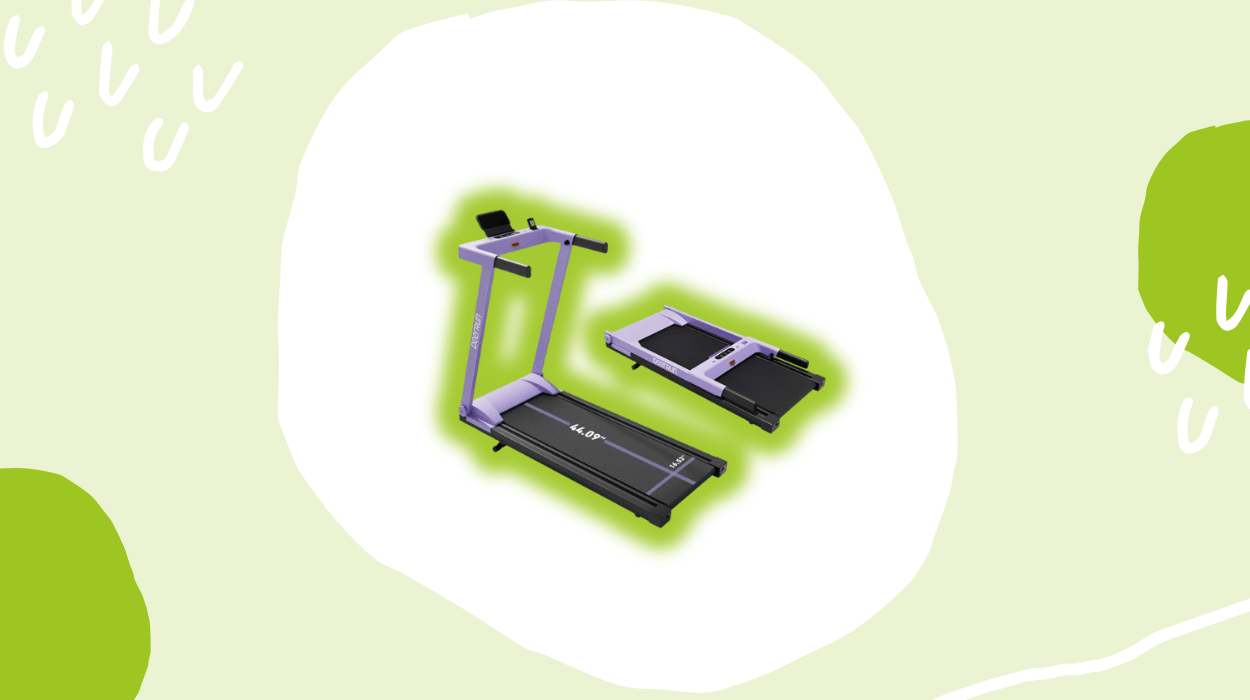
DeerRun is a home fitness equipment brand that offers compact equipment intended for indoor and space-conscious use. The brand features foldable treadmills, under-desk walking pads, incline-enabled models, and smart-connected equipment positioned for home offices, apartments, and everyday movement.
In this review, we examine the brand’s core positioning, range of offerings, associated brand advantages, and potential limitations. The review also analyzes real user experiences with the brand’s offerings, particularly around build quality, usability considerations, and value proposition.
DeerRun is structured around offering compact, foldable, and space-conscious products that are said to be made for home use, small living environments, and work break movement.
As part of its Treadmills segment, the brand lists offerings like X20 Treadmill with 15% Auto Incline, New 2 in 1 Foldable Treadmill, A1 Pro Move +, and Z10 Pro. The brand also offers Walking pads, which form a core part of the brand’s lineup, with options like the Q2 Urban 7% Incline, Q1 Urban Plus, Z10 12% Auto Incline, and Z20 Foldable walking pads.
Beyond treadmills and walking pads, the brand offers the S500 Pro King Size Indoor Exercise Bike and the RW600 Adjustable Magnetic Resistance Smart Rowing Machine. The brand also offers Extension Power Cord, Foldable Treadmill Mat, Treadmill Maintenance Kit, Smart Music Boxing Machine, and Smart Scale for Body Weight as part of its accessories lineup.
DeerRun integrates its equipment ecosystem with the PitPat app, which is positioned as a connected fitness platform supporting data tracking, virtual events, head-to-head challenges, and competitive gameplay.
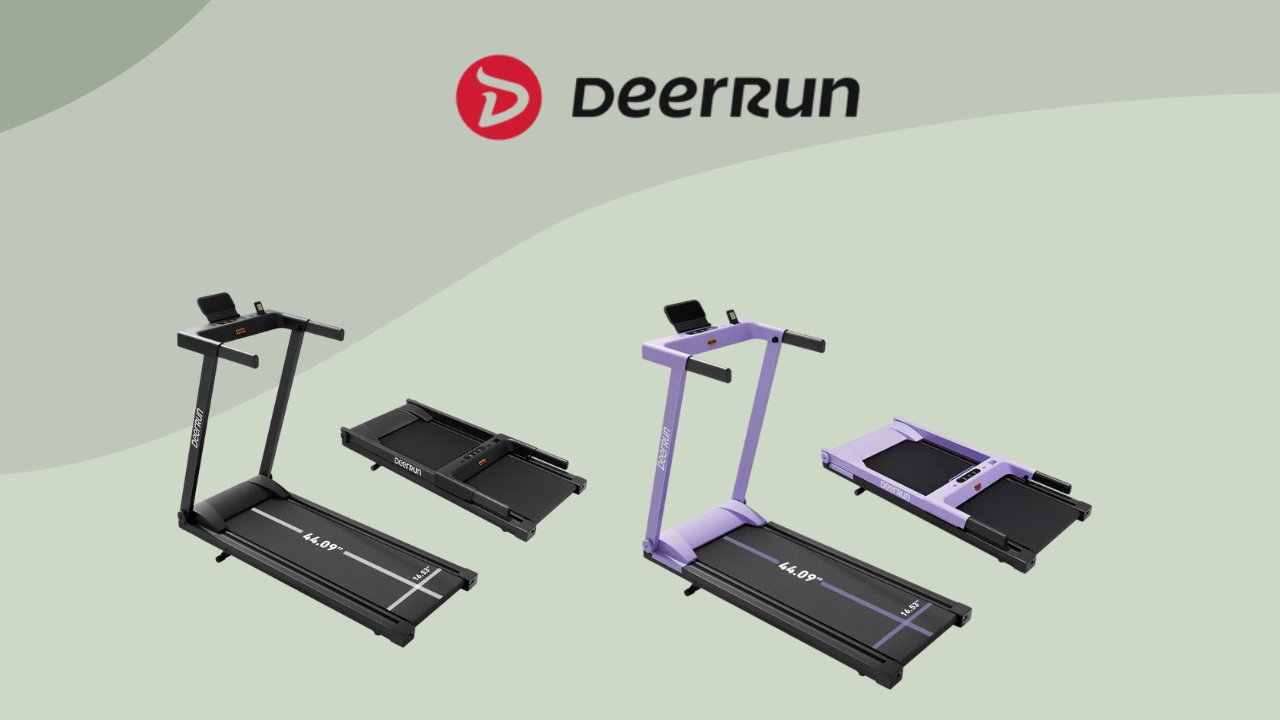
A1 Pro Move+ Smart Foldable Treadmill is a compact home treadmill engineered for consistent daily use, space efficiency, and long-term mechanical stability. The frame is reinforced with steel components and is rated to support up to 350 pounds of weight. According to its official site, the treadmill measures around 53.35″ in diameter, 24.06 in width, and 44.57″ in height. Its folding design allows the unit to be stored vertically or slid under furniture.
As per the makers, its running platform integrates a 6% fixed incline, which alters exercise biomechanics by increasing muscle activation in the glutes, hamstrings, and calves while elevating cardiovascular demand. Incline walking and running are associated with higher energy expenditure at lower speeds, which may support weight management goals and endurance.
Speed adjustments range between 0.6 and 10.0 mph with the treadmill that can be managed through a remote control or onboard touch interface, allowing changes without interrupting stride. The motor system is paired with an upgraded internal control chip, intended to maintain steady belt speed under load and reduce mechanical strain during longer sessions. Smart connectivity is a central component of the A1 Pro Move+. The treadmill connects via Bluetooth and NFC to the PitPat fitness app, enabling workout tracking, adaptive training plans, and virtual running environments.
A1 Pro Move+ 6% Incline Foldable Treadmill intends to support daily walking, jogging, and light running while prioritizing space efficiency. It comes with a fixed 6% incline, which adds workload without requiring higher speeds, allowing sessions to focus on calorie burn and lower-body engagement through elevation rather than intensity alone.
The treadmill weighs just under 80 pounds, ensuring repositioning within a room is manageable. As per its official website, speed control ranges from 0.6–10 mph, covering slow walking through sustained running for most home training needs. A1 Pro Move+ 6% Incline Foldable also features a five-layer running belt that contributes to cushioning and noise reduction, aiming to reduce joint stress during longer sessions.
According to its official site, the Z10 Pro Foldable Treadmill’s frame supports a weight-bearing capacity of up to 300 pounds and uses a 2-in-1 configuration that allows the unit to function as a low-profile walking treadmill when folded or a full upright treadmill when expanded. Integrated transport wheels and a slim folded profile allow the treadmill to be stored against walls or moved between rooms with minimal effort.
The Z10 Pro model features a 12% automatic incline, which is electronically controlled through the remote or connected app. Automatic incline enables progressive intensity adjustments during workouts, increasing lower-body muscle engagement and cardiovascular load at lower running speeds. Speed ranges differ by mode, with walking speeds up to 3.8 mph when folded and running speeds up to 7.5 mph when fully deployed.
Z10 Pro Foldable Treadmill also features a dual-screen layout, combining a primary LED dashboard for real-time metrics tracking of speed, distance, time, and calories with a secondary control display positioned for quick adjustments during movement. Shock-absorbing pads and a multi-layer running belt can help potentially reduce joint impact and vibration, contributing to quieter operation and improved comfort during longer incline sessions.
X20 Treadmill with 15% Auto Incline offers a higher-capacity home treadmill built for sustained running, incline training, and interactive workouts. As per its official website, its frame could support a weight load of up to 400 pounds, paired with a full running deck that allows longer, more natural strides. The treadmill supports a maximum speed of 11.3 mph, which could make it especially compatible for steady running and interval-based sessions rather than light walking alone.
The treadmills provide a 15% automatic incline, which expands workout intensity without requiring speed increases. Such an incline range may support hill-style training, lower-body engagement, and calorie expenditure through elevation rather than pace. Incline adjustments are electronically controlled, allowing seamless changes during sessions rather than stopping to manually reset levels.
X20 Treadmill with 15% Auto Incline maintains a foldable design, reducing its stored height to approximately 7.3 inches. Built-in transport wheels support repositioning within a room, making it more adaptable to shared living spaces than traditional non-folding running treadmills.
DeerRun positions itself around smart fitness needs by stating that its treadmills and walking pads connect to the PitPat app through NFC one-tap pairing or Bluetooth. According to the brand, the setup allows workouts to sync automatically and supports real-time activity tracking without extra setup steps. The connection is presented as a built-in part of the equipment rather than an optional add-on.
The brand also claims that PitPat adds interactive elements like virtual runs, challenges, leaderboards, and AI-guided coaching. Workout data like steps, calories, session time, and heart rate is tracked inside the app. Such features are framed as software-driven means to make home workouts more engaging instead of relying only on the physical machine.
The connected setup positions DeerRun as a tech-focused fitness brand rather than just an equipment provider. Integrated app features, on-device displays, and simple controls can make workouts easier to track, adjust, and stay consistent with.
DeerRun states that many of its equipment is built with slim, foldable designs and compact footprints intended for apartments, offices, and work-from-home spaces. Treadmill models like the Z10 Pro, Z20, and A1 Pro are described as including transport wheels and under-desk modes for easier storage, while still supporting weight capacities ranging from 300 to 350 pounds.
The brand also claims quiet operation as a core design focus across much of its lineup. While specific decibel levels are not listed in product specifications, the brand positions these units as suitable for shared homes and apartments.
DeerRun places more emphasis on accessibility than high-performance training. Features like simple remote controls, clear LED displays, and low step-up heights are described as supporting beginners, older adults, and daily walkers. The brand’s product focus stays centered on walking and light jogging rather than high-speed or intensive running.
Such an inclusive approach supports everyday use across a wider range of living situations and fitness levels. Compact sizing, quieter operation, and easy controls can make it easier to stay active at home without rearranging space or adapting to complex equipment.
DeerRun is an early-stage brand still in development phases, with limited maturity reflected in its short operating timeline. It gained visibility relatively recently, with its website launch around late 2023 and product introductions through 2024 and 2025. Treadmill models like the A1 Pro, which appeared in listings around mid-2024, and the A5 Pro/A6 Plus variants in 2025 updates, highlight this roughly 2-3 year history.The brand’s origin dates to September 2023, which places it well behind established competitors like Horizon Fitness, founded in 2004, and Sole Fitness, with more than two decades in the market. While short-term reviews exist on platforms like YouTube and retailer sites, independent forums show limited long-term performance and durability data. DeerRun’s early stage maturity can be a limitation in terms of proven longevity, extended reliability data, and long-term ownership confidence.
When comparing the brands, both Horizon Fitness and DeerRun offer multiple home fitness products. However, the brands differ in aspects like their range of offerings, core positioning, features highlighted, and accessibility.
Horizon Fitness operates as a cardio-focused brand under Johnson Health Tech, a global manufacturer with decades of experience across commercial and residential fitness equipment. Its offerings are framed as durable machines intended for consistent home use and light commercial settings. Meanwhile, DeerRun operates as a convenience-oriented home fitness brand that focuses on compact, space-efficient equipment intended for apartments, home offices, and smaller living spaces.
In terms of product range, Horizon’s catalog is maintained around performance-oriented cardio equipment, with treadmills as the main focus. As part of its treadmill lineup, the brand lists Studio Series and Go Series models like 7.0 AT, 7.8 AT, 7.4 AT, T101, and T202 treadmills. The brand also offers 7.0 IC Bike, 5.0 IC Bike, and 5.0 U Upright Bike as part of its bike lineup. Beyond this, the brand offers Heart Rate Chest Strap, Silicone Lubricant 3-Pack, EX-59 Elliptical, and Universal UB300 Adjustable Bench as accessories. DeerRun’s lineup is built around walking pads, compact treadmills, exercise bikes, rowing machines, and related accessories. The brand offers Z10 Pro Muse Type 2-in-1 Foldable Treadmill, A1 Pro Move+ Smart Foldable Treadmill, and the Z20 Suitcase-Style Foldable Treadmill, alongside walking pads like the Q2 Urban Smart, Z10 12% Auto Incline Smart, and Q1 Classic Pro Walking Pad. The brand also extends its lineup to include the Foldable Treadmill Mat, Smart Scale for Body Weight, Treadmill Maintenance Kit, and RW600 Adjustable Smart Rowing Machine.
Technology integration is handled differently by each brand. Horizon Fitness emphasizes open connectivity, allowing equipment to work with third-party fitness apps, Bluetooth platforms, and wearables without requiring subscriptions for basic operation. Optional platforms, such as atZone, provide added content like classes but are not required for core use. DeerRun centers more of its engagement around the optional PitPat mobile app, which adds activity tracking, challenges, and game-style motivation features.
Horizon Fitness positions itself as a performance-oriented, hardware-focused cardio brand suited for sustained training, larger home setups, and those who want durable equipment with flexible digital compatibility. DeerRun positions itself as a compact, accessibility-focused brand designed for small spaces and daily movement habits. The brand prioritizes foldability, storage efficiency, and app-based engagement over heavy construction or extended warranties.
Sole Fitness and DeerRun both offer home fitness equipment, but they are built around very different ideas about durability, space, and long-term ownership. As per its official site, Sole Fitness is a U.S.-based manufacturer headquartered in Salt Lake City (Utah), with product roots in commercial and hotel environments. The background continues to shape its focus on structural durability, higher weight limits, and longer service life. DeerRun positions itself as a convenience-focused home fitness brand designed for small living spaces, with priority placed on portability, compact storage, and quick setup.
Sole’s catalog is broad and designed to cover most home gym needs through one brand. The lineup includes treadmills, ellipticals, stationary bikes, rowing machines, and strength equipment. Its treadmill range is split into multiple tiers across options like F80, F89, F63, F65, TT8, and ST90 treadmills. The brand offers R92, LCR, LCB, and B94 as part of its exercise bikes lineup. It also offers models like E25, E35, E98, and E95S under its elliptical lineup.
Meanwhile, DeerRun’s catalog also includes treadmills, rowing equipment, exercise bikes, and accessories. The brand provides models like A1 Pro Move+ Smart Foldable, Z10 Pro Foldable, X20 Treadmill with 15% Auto Incline, and New 2-in-1 Foldable Treadmill in its treadmills category. Its lineup further extends to offerings like the RW600 Adjustable Smart Rowing Machine, Q1 Classic Pro Walking Pad, Foldable Treadmill Mat, Treadmill Maintenance Kit, and Z10 12% Auto Incline Smart Walking Pad.
In terms of pricing structure, there are further differences between the brands. Sole Fitness’s ellipticals are priced between $1200–$3000, treadmills are priced within the $1200–$4600 range, and exercise bikes are around $1000–$2000. Meanwhile, the treadmills from DeerRun are priced between $300–$950, exercise bikes range around $200–$225, and rowing machines are typically priced between $380 and $415.
Sole Fitness reflects a durability-oriented, long-term equipment model shaped by its commercial and hospitality background. The brand’s offerings are paired with higher weight capacities, larger footprints, and pricing that generally falls in the mid-to-upper home fitness range. DeerRun, meanwhile, positions its lineup on compact, foldable, and space-efficient equipment designed for smaller living environments. It aligns with affordability, ease of storage, and quick setup.
In assessing DeerRun, we reviewed the brand’s presence, core background, and visibility across independent review platforms.
On TenereTeam, the brand holds a 4.8 out of 5 score based on a very limited number of reviews. The available profile suggests generally favorable feedback patterns, particularly around perceived price, quality standards, and customer service responsiveness.
However, with only a small number of reviews contributing to the TenereTeam score, there is insufficient breadth to assess the brand’s consistency in areas like order fulfillment reliability, post-purchase support, or how the brand manages returns and escalations.
While evaluating DeerRun, we reviewed verified user feedback shared on Trustpilot, where the brand currently carries a 3.7 out of 5 score based on 1,500+ reviews. Many users noted that units arrived fully functional out of the box, pointing to smooth operation, useful incline and speed settings, compact folding designs, and straightforward setup. Several users mentioned early delivery or faster than expected order arrival, while others described the purchase process as simple and the equipment as suitable for daily walking or light exercise at home. However, some users are experiencing described manufacturing defects, incomplete orders, missing accessories like remotes, and walking pads failing shortly after initial use with error codes.
Negative feedback is concentrated around customer service responsiveness, order processing, and returns handling. A few users described delayed or absent responses from the brand’s support team, with reports of no follow-up for days or weeks despite stated response time expectations. Shipping and fulfillment problems are also highlighted, which include concerns around duplicate orders caused by checkout errors, delayed processing despite charges being posted, and difficulty obtaining refunds.
Our evaluation indicates that many users appreciated the brand’s offerings, especially treadmills and walking pads. However, critical feedback focused on manufacturing defects, shipment delays, issues with refunds, and delays in customer service responsiveness.
DeerRun is focused on compact designs intended for home environments with limited space. Its catalog emphasizes quiet motor performance, under-desk compatibility, and ease of storage, which supports routine walking and low-impact daily movement.
However, the brand’s relatively short market presence and mixed post-purchase feedback can introduce reasonable caution. Limited long-term reliability data, service consistency concerns, and modest performance ceilings mean the brand is best approached with defined expectations. DeerRun may provide support for maintaining daily activity and routine movement through its products, but it should not be considered as a long-term, performance-driven training platform.

Contact us at [email protected] or follow @leafsnap on Twitter! View our Privacy Policy.