

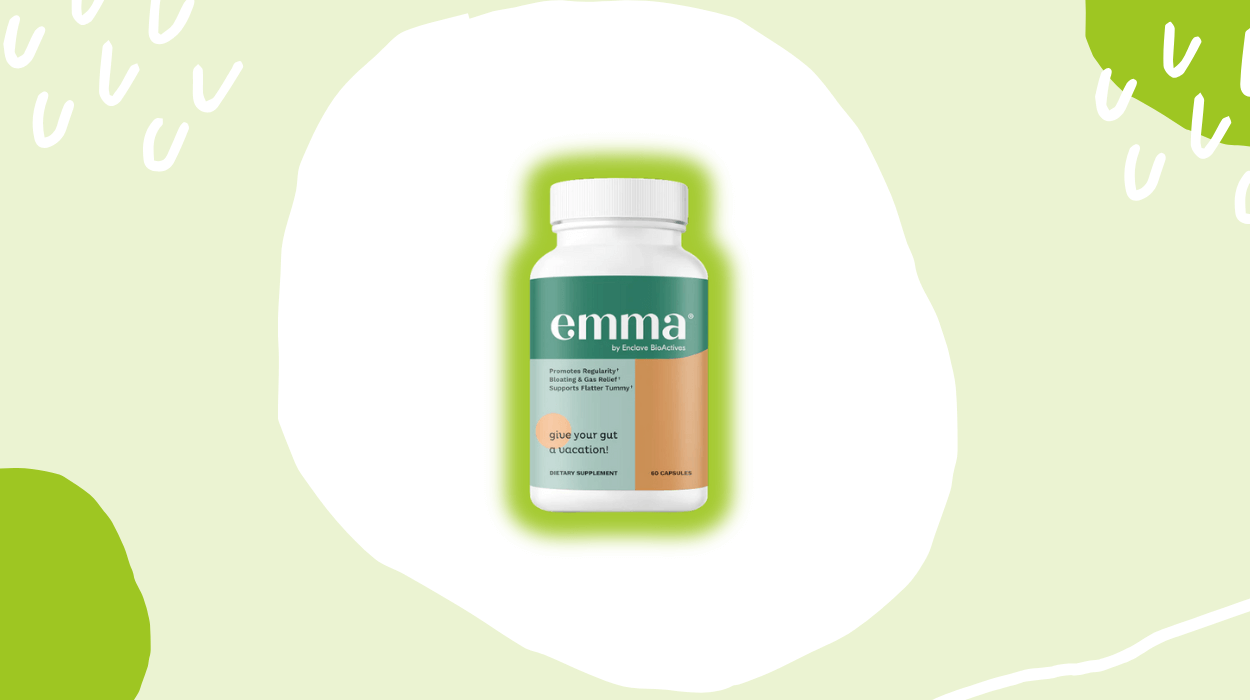

Emma Relief could support gut health while minimizing concerns such as bloating, gas, and irregular bowel movements. It may also help support digestion and reduce discomfort after meals.
The manufacturers claim that the formulation could ease occasional heartburn or indigestion and support smoother bowel movements without strain. It may also help with gut microbiome balance and contribute to improved immune resilience.
In this review, we examine how the product works, the ingredient philosophy behind its digestive claims, associated benefits, and potential side effects.
As per its official website, Emma Relief is a microbiome-focused formula intended to tackle digestive imbalance. The product is described as targeting digestion-slowing microorganisms, including methane-producing archaea, which are associated with reduced intestinal motility and triggering digestive issues.
The formula includes ingredients like deglycyrrhizinated licorice (DGL), quercetin, berberine, and Star Anise. Such ingredients may contribute to gut lining support, bile flow, and microbial balance. The product is available in various purchase options, including 1-pack, 3-pack, and 6-pack formats.
As per the manufacturers, Emma Relief is made in FDA-compliant and GMP-certified facilities in the United States. The product also undergoes screening for contaminants, heavy metals, and allergens via quality testing methods such as infrared spectroscopy.
As per the official site, Emma Relief is positioned around the idea that slowed gut motility is closely linked to excess methane production in the small intestine, which may interfere with peristalsis, the rhythmic muscle contractions that move food and waste through the digestive tract.
Methane-producing microorganisms are described as disrupting normal intestinal signaling, leading to slower transit time, gas buildup, and harder stool consistency. The formulation intends to reduce factors associated with this methane activity while calming intestinal nerve responses, which could support digestive processes more smoothly and promote comfort.
The product may work by restoring the integrity of the gut lining and improving communication between the intestinal wall and the nervous system that controls gut motility.
Ingredients such as deglycyrrhizinated licorice (DGL) and quercetin are included in the formulation, which could support mucus production and strengthen tight junctions between intestinal cells. Such effects help reduce unwanted bacterial byproducts and toxins from crossing into the bloodstream, which may otherwise trigger inflammation and further slow digestion.
At the microbiome level, Emma Relief focuses on supporting gut microbiome balance rather than introducing external probiotic strains. Compounds like berberine and star anise may selectively suppress disease-associated and digestion-slowing bacteria, particularly in the small intestine, where overgrowth can disrupt motility.
The formulation also contains prebiotic fibers, such as chicory root inulin, which provide fuel for beneficial bacteria, encouraging the natural growth of beneficial bacterial strains like Bifidobacteria and Akkermansia.
Berberine may help inhibit the growth of methane-producing microorganisms in the gut, including archaea that slow intestinal movement. This could support more consistent motility, which further promotes regular bowel movements and reduces the feeling of sluggish digestion.
Berberine might also support the intestinal environment by improving how the gut lining responds to stress and inflammation. Berberine can activate AMP-activated protein kinase (AMPK), a vital regulator of cellular energy balance. In the digestive tract, AMPK activation helps intestinal cells maintain tight junction integrity, which is important for avoiding excess permeability. A more stable gut barrier may reduce irritation and abnormal nerve signaling that might otherwise contribute to cramping, discomfort, and post-meal digestive distress.
Deglycyrrhizinated licorice, also called DGL, stimulates the production of mucus in the stomach and intestinal tract. This mucus layer works as a physical barrier that shields epithelial cells from acid, digestive enzymes, and irritants. A stronger protective lining may help reduce irritation that may otherwise lead to slow digestion and discomfort, such as heartburn and bloating.
Compounds in licorice root may help increase blood flow to the mucosal surface, which delivers oxygen and nutrients needed for cell renewal. The improved circulation could support faster regeneration of damaged or stressed intestinal cells, helping maintain a smoother and more resilient gut environment.
Quercetin could help support immune and inflammatory activity within the gut lining by serving as a mast cell stabilizer in the intestinal tract. This may help limit unnecessary inflammatory signaling, supporting a calmer digestive response after meals.
Quercetin might also preserve tight junction proteins that hold intestinal cells together. These junctions control what passes from the gut into circulation. When they become weakened, increased permeability may trigger irritation and abnormal nerve activation that disrupts motility.
Digestive tissues are exposed to oxidative stress from microbial activity, dietary components, and immune responses. Quercetin helps suppress reactive oxygen species at the cellular level, protecting gut cells from damage that may otherwise impair normal digestive coordination.
Star anise contains natural compounds such as anethole that have antimicrobial effects against certain bacteria involved in excessive fermentation. This helps lower internal pressure and discomfort, potentially supporting a smoother digestive process and helping reduce bloating.
Anethole in Star anise has mild antispasmodic properties, meaning it helps relax overly tight smooth muscle in the digestive tract. When intestinal muscles contract too strongly or irregularly, stool movement may become inefficient and uncomfortable. Star anise could support more relaxed and coordinated muscle activity, helping food and waste move through the intestines with less resistance, contributing to improved regularity.
Resveratrol influences pathways such as NF-κB, which control the production of inflammatory molecules in intestinal cells. When these signals stay elevated, they can interfere with normal gut nerve communication and slow coordinated movement of the intestines. Resveratrol could moderate such responses, which helps create a calmer internal environment that supports steadier digestion and reduced post-meal discomfort.
It may also shift microbial activity toward less gas-producing behavior without acting as a broad antimicrobial. Instead of wiping out bacteria, resveratrol could alter microbial metabolism, which helps reduce excess fermentation in the colon. Lower fermentation activity means less pressure from gas buildup, supporting reduced bloating and a more comfortable digestive experience.
Chicory root inulin acts as a selective fuel source for beneficial gut bacteria. Inulin is a fermentable soluble fiber that reaches the colon largely undigested. Once there, it is used by helpful bacteria such as Bifidobacteria, which convert it into short-chain fatty acids like butyrate. These compounds help nourish colon cells and support normal signaling between the gut lining and intestinal muscles, which support regular bowel movements.
Inulin also supports digestion by influencing stool structure and transit time. As a soluble fiber, it absorbs water and increases stool softness and bulk. This physical change stimulates stretch receptors in the intestinal wall, which helps trigger natural peristaltic contractions. Chicory root inulin might also help minimize digestive discomfort by limiting the buildup of harmful fermentation byproducts over time.
Emma Relief may support bowel regularity by addressing digestion-slowing activity in the small intestine that interferes with normal stool movement. The product features berberine and deglycyrrhizinated licorice, which help target methane-producing organisms that disrupt peristalsis. When this movement slows, stool can remain in the colon longer, contributing to constipation and incomplete elimination.
The product limits methane-related signaling that could dampen gut muscle activity. Emma Relief is also described as supporting intestinal lubrication, which may allow stool to move with less resistance. Such actions may support easier, more complete bowel movements without relying on stimulant-based mechanisms.
Emma Relief is positioned to support post-meal comfort by reducing digestive slowdown that often follows heavier or trigger foods. The buildup of methane gas and intestinal nerve irritation may delay food transit, leading to pressure, bloating, and discomfort after eating.
The product is described as calming intestinal nerve activity while supporting smoother digestive flow. Emma Relief could improve how food and waste move through the gut, which may help reduce sensations of fullness, tightness, or burning after meals. Over time, digestion may feel less reactive, especially after consuming foods that cause discomfort.
As per the manufacturers, Emma Relief is formulated to support the gut lining through ingredients like chicory root inulin and quercetin. The formulation could support mucus production and tight junction stability within the intestinal lining. Such effects may help shield the gut surface from digestive acids and waste byproducts while maintaining a more controlled internal environment.
Improved gut lining integrity acts as a protective barrier between digestive contents and the bloodstream. Continued support of the gut lining may contribute to steadier digestion, decreased bloating, and reduced gut irritation over time.
Emma Relief features compounds that actively influence bile flow, digestive secretions, and gut motility. For instance, berberine could stimulate bile acid release and alter gastric enzyme activity, while resveratrol may increase intestinal signaling related to digestion. When these actions occur rapidly, they may temporarily irritate the stomach lining or increase gastric pressure, leading to nausea, heaviness, or mild cramping. Such a response is more likely if you take the formulation on an empty stomach or if you have sensitive gastric mucosa or a history of acid-related discomfort.
Emma Relief includes biologically active compounds that influence metabolic signaling and vascular tone. Berberine may lower circulating glucose by activating AMPK pathways, while quercetin and resveratrol could promote nitric oxide–related vasodilation. These effects may temporarily alter blood flow dynamics or blood sugar levels, which might translate as headaches or lightheadedness sensations. Such effects tend to be more noticeable if you are prone to blood sugar dips, low blood pressure, or sensitivity to metabolic shifts.
When comparing the products, both Unbloat and Emma Relief are positioned as daily capsule-based digestive support formulations. However, they approach bloating, gas, and digestive discomfort through clearly different explanatory models. The products also have some differences in terms of their quality standards, safety certifications, and pricing structure.
Unbloat is presented as a broad digestive support formula designed around the assumption that bloating develops from multiple overlapping factors, including incomplete food breakdown, gas accumulation, microbial imbalance, and irregular bowel movement. Meanwhile, Emma Relief is positioned around an identity that centers on methane production and microbiome imbalance as the primary drivers of slowed gut motility, constipation, and persistent bloating.
The formulation structure of Unbloat reflects its multi-factor approach. Unbloat is described as containing 40 natural ingredients, including 21 digestive enzymes, 7 probiotic strains totaling twenty-five billion CFU, six herbal components, four essential nutrients, and two prebiotic fibers.
The probiotic strains include Bifidobacterium bifidum, Lactobacillus casei, Bifidobacterium lactis, and Lactobacillus plantarum, each described in relation to supporting microbiome balance, gas reduction, and digestive comfort. Unbloat also contains added ingredients like folate, magnesium, fennel seed, and digestive enzymes like amylase, phytase, and protease.
Emma Relief highlights specific plant-based compounds tied to biological processes within the gut. Deglycyrrhizinated licorice is described as supporting mucus production along the gastrointestinal lining. Star anise is included in the formula to stimulate bile release, which is framed as aiding digestion and supporting stool softening. Quercetin is positioned as strengthening tight junctions within the intestinal lining, which may support gut barrier integrity and reduce permeability-related irritation. Other ingredients in the formula include berberine, chicory root inulin, and resveratrol.
Quality, safety, and manufacturing disclosures also differ in emphasis. The makers of Unbloat claim that it's a doctor-formulated product by a board-certified gastroenterologist and manufactured in the United States. The product comes with allergen disclosures stating that it excludes dairy, gluten, soy, GMOs, nuts, shellfish, sesame, preservatives, and other listed allergens. Meanwhile, the makers of Emma Relief emphasize manufacturing controls and testing standards, stating that production occurs in FDA-registered, GMP-certified facilities within the United States. The official site mentions ingredient testing for purity, potency, heavy metals, and contaminants, along with dietary disclosures indicating the absence of gluten, dairy, soy, GMOs, and common allergens.
Akkermansia and Emma Relief are both positioned as daily capsule-based digestive support offerings, but the products differ clearly in ingredient composition, biological targets, and quality disclosures.
Developed by Pendulum, Akkermansia is presented as a single-strain probiotic formulation built around Akkermansia muciniphila as the sole live microbial ingredient. One capsule is described as delivering 100 million AFU (active fluorescent units) of live Akkermansia muciniphila, supported by chicory inulin as a prebiotic carrier. The product’s official site emphasizes that this strain is not commonly obtainable through food sources and is distinct from multi-strain probiotics. As per the manufacturers, the formulation works by interacting with the gut’s mucin layer, stimulating new mucin production, and reinforcing gut barrier integrity.
Emma Relief is positioned as a multi-ingredient digestive formulation intended to address bloating, gas, constipation, and slowed gut motility through several overlapping mechanisms. The ingredient profile of Emma comprises berberine to support microbial balance and suppression of methane-associated organisms, while chicory root inulin is added to support bowel regularity. Other ingredients in the formulation include deglycyrrhizinated licorice (DGL), Star anise, quercetin, and resveratrol. Unlike Akkermansia, Emma Relief does not introduce live probiotic strains and instead focuses on reshaping the gut environment.
Quality and safety disclosures for Akkermansia emphasize strain specificity and safety evaluation rather than manufacturing detail. The content states that Akkermansia muciniphila is a naturally occurring bacterium in healthy human microbiomes and has undergone extensive safety review. On the other hand, Emma Relief emphasizes that all batches undergo screening for heavy metals, potency, purity, and contaminants. It also states that products are made in FDA-compliant and GMP-certified facilities in the United States.
In terms of pricing, there are some differences between the products. For instance, one bottle (one-month supply) of Akkermansia is priced between $80–$90. Meanwhile, one jar of Emma Relief costs around $55–$65, with an extra $4.95 for shipping charges.
In evaluating Emma Relief, we looked at the real user experiences of the product on Amazon, where it currently holds a 3.9 out of 5 score based on more than 7,300+ reviews.
Many users experienced improvements in bowel regularity, reduced straining, and relief from persistent constipation after using the product. Positive experiences frequently described restored daily bowel movements, reduced abdominal discomfort, and better tolerance compared to stimulant-based laxatives.
However, a few users reported little to no benefit, delayed or incomplete relief, or improvements only after combining the product with dietary changes. Cost concerns appeared repeatedly, with some users feeling the results did not justify the price. Other users expressed frustration when expectations set by promotional messaging did not match their personal experience, particularly around the speed of relief.
Our evaluation of Emma Relief’s review patterns indicates that the product delivered meaningful digestive support for many users, particularly those dealing with chronic constipation and slow gut motility, but results are not uniform across all users. At the same time, cost sensitivity and inconsistent effectiveness remain limiting factors highlighted in the reviews.
To evaluate Emma Relief from a brand reputation standpoint, we assessed independent review platform scores, review volume, and complaint themes.
On Trustpilot, the brand holds a 2.9 out of 5 rating based on more than 800+ reviews. Many users cited improved bowel regularity and reduced digestive discomfort with the brand’s products. However, a few users referenced a lack of results, fading effectiveness over time, or dissatisfaction with the brand’s marketing claims. The polarized response between positive and negative sentiment indicates that user experiences may vary.
On BBB, the brand has an A+ rating, BBB accreditation, indicating adherence to ethical business practices. However, the BBB reviews reflected non-product issues, including unexpected multi-bottle charges, recurring billing disputes, difficulty canceling orders, and challenges accessing refunds. The contrast between the high accreditation grade and the very low consumer rating highlighted a gap between formal responsiveness standards and perceived customer fairness.
Our evaluation indicates that strong positive outcomes for some users coexist with a substantial volume of dissatisfaction tied to expectation management and post-purchase experience. The relatively new entrant status also implies that the brand is currently developing.
Emma Relief is formulated to support digestive pacing, gut lining support, and stool consistency rather than immediate symptom suppression. Outcomes and personal experiences with the product are likely to vary based on individual tolerance, baseline gut function, and sensitivity to fermentable fibers or bioactive compounds.
The formulation contains fermentable fibers, such as inulin, which may increase gas, abdominal pressure, or bloating during initial use. Herbal components in the formulation may also contribute to mild acid reflux, changes in stool texture, or transient digestive discomfort during early adaptation.
When opting for the product, it is advisable to pair it with regular meals with adequate soluble fiber, reduced intake of highly processed foods, and moderation of excess sugar and refined carbohydrates. Staying hydrated may further support stool softness and intestinal movement, while engaging in gentle daily activities, such as walking or cycling, may encourage natural gut motility.

Contact us at [email protected] or follow @leafsnap on Twitter! View our Privacy Policy.