
Plain Jane is built around strain variety and measurable product specifications. The company emphasizes accessibility and breadth of selection. Its core differentiator is a strain-based catalog structured around potency metrics and cultivation categories.
The brand claims to focus on a wide format availability. While this approach centers on technical specifications, it does not inherently address consistency, sourcing depth, or refinement standards.
This review evaluates product quality, pricing structure, transparency practices, legal positioning, and regulatory compliance considerations within the broader market. It will examine how the brand works around evolving federal and state laws, and whether its model aligns with current regulatory frameworks or introduces structural risk.
Plain Jane is a Southern Oregon–based hemp company founded in 2018, specializing in high-CBD, low-THC products. The company’s product portfolio begins with hemp flower, offering dried and cured buds cultivated indoors, in greenhouses, and outdoors, typically testing between 15% and 25% CBD. Formats include full ounces, small buds, and strain-specific selections.
Plain Jane also maintains a broad lineup. Edibles and capsules include gummies and gel capsules offered in full-spectrum and broad-spectrum formats, along with sleep-oriented blends. In the oils and tinctures category, the brand claims to offer formulations in full-spectrum, broad-spectrum, isolate, CBN, CBG, and blended profiles.
For localized use, the brand’s topical and skincare collection includes salves, roll-ons, body butter, milk and honey lotion, massage and body oils, eye cream, day moisturizer, illuminating facial serum, beard butter, and bundled self-care kits.
As per the official site, the brand claims to maintain quality through independent third-party laboratory testing covering potency, terpene analysis with full breakdowns, and safety screening for pesticides, heavy metals, and microbial contamination.
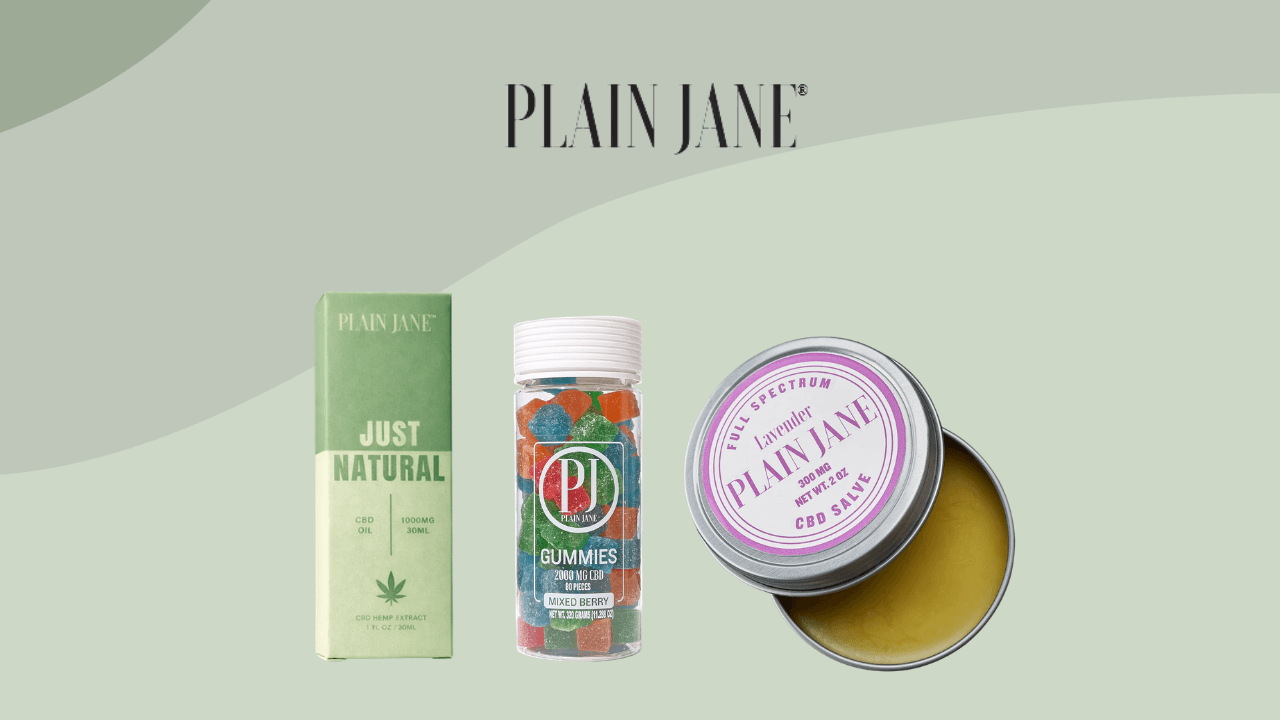
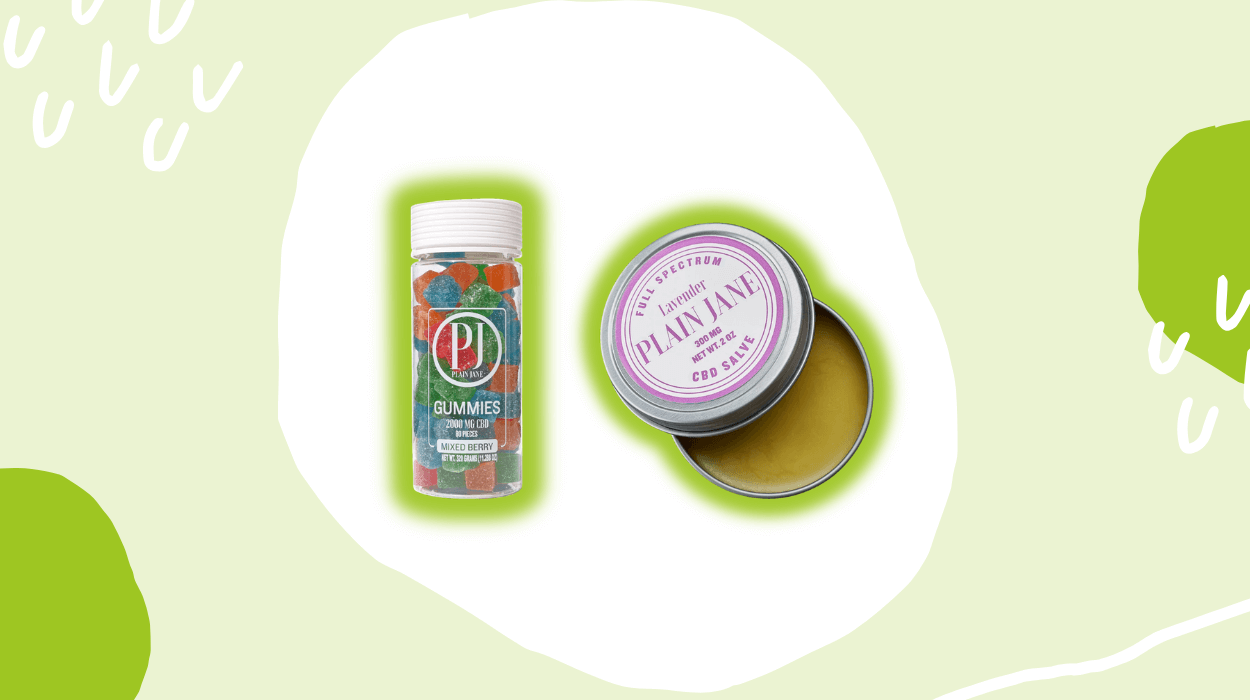
Plain Jane structures its gummy lineup to comply with the 2018 Farm Bill requirement of less than 0.3% Delta-9 THC by dry weight. The CBD + CBN + Melatonin Gummies are formulated as vegan, pectin-based blueberry gummies and include melatonin as an additional active ingredient. Melatonin is an endogenous hormone involved in regulating circadian rhythm and sleep-wake signaling. The brand’s Plain Jane Gummies are gelatin-based and use an isolate formulation without additional compounds.
The Delta-8 THC Gummies, the Delta-9 THC Gummies, the THCV Gummies, and the CBG Energy Gummies each contain distinct hemp-derived formulas with different biochemical profiles. Delta-8 THC and Delta-9 THC are psychoactive compounds that are said to interact primarily with CB1 receptors in the endocannabinoid system. THCV (tetrahydrocannabivarin) is a structural analog of THC with receptor activity, while CBG (cannabigerol) is a non-intoxicating cannabinoid known as a biosynthetic precursor to other cannabinoids.
Plain Jane maintains a topicals collection positioned within skincare and external wellness. The current lineup includes Salve, Cool Roll-On, Body Butter, Hemp Seed Nourishing Eye Cream, Illuminating Facial Hemp Seed Oil Serum, Hemp Seed Oil Salve, Hemp Seed Oil Day Moisturizer, and Milk Facial Hemp Seed Oil Cleanser, among others. In topical use, cannabidiol is generally understood to interact locally with components of the skin’s endocannabinoid system, including CB1 and CB2 receptors present in cutaneous tissue.
The collection also features hemp seed oil–focused skincare options that emphasize fatty acid composition, particularly omega-3 and omega-6 linoleic acid content. Many of them have conditioning agents, occlusive barrier support, and cosmetic performance factors such as texture, glide, and absorption rate.
As per the official site, Oils include isolates, broad spectrum, full spectrum, CBG, CBN, and a blended CBN:CBD: CBG formula. Certain formulations are labeled THC-free, while full-spectrum variants retain trace amounts of THC within federal legal limits. These oils consist of hemp-derived cannabinoid extracts diluted in MCT oil or hemp seed carrier oils.
The extraction methods referenced include CO₂ and ethanol processing, both standard techniques for isolating cannabinoids from hemp plant material such as flowers and leaves. The brand claims that some of its formulations use proprietary nanotechnology intended to alter particle size, which may affect dispersion characteristics.
Plain Jane states that it sources hemp from more than 15 small American family farms, primarily in Southern Oregon. However, the company does not publicly identify specific farm partners tied to individual product batches, disclose harvest year information, name growers per lot, confirm organic certification status by batch, detail pesticide protocols, or provide a seed-to-sale traceability system linking finished products to cultivation sources. There is no publicly available upstream documentation verifying cultivation practices or sustainability metrics at the batch level. As presented, sourcing transparency relies on generalized company statements rather than lot-specific verification. This structure limits the ability to independently confirm cultivation specifics. Without batch-linked grower identification or harvest data, you have to rely on the brand’s overall sourcing assurances rather than traceable documentation. This reduces visibility into upstream agricultural practices if you prefer transparency or documented sustainability verification.
Plain Jane operates within a regulatory landscape that remains unsettled at the federal and state levels. The 2018 U.S. Farm Bill legalized hemp containing less than 0.3% THC, but it did not establish a comprehensive federal retail framework for hemp-derived consumer products. Hemp brands function in a category without fully standardized federal retail guidance. State-level regulations vary significantly, with some states restricting or prohibiting certain hemp product formats, while others impose additional licensing, labeling, or compliance requirements. This regulatory variability can affect product availability, shipping eligibility, and purchasing consistency depending on your state of residence. Distribution policies may change as laws evolve, and certain products may not be accessible in all regions. The lack of uniform federal standards also means the regulatory future of hemp-derived products remains subject to policy shifts. This environment introduces uncertainty around long-term availability and consistency, influencing purchasing stability.
CBDistillery and Plain Jane are both U.S. brands, but CBDistillery maintains a very broad catalog that includes oils, gummies, capsules and softgels, topicals, and pet products, along with multiple blends that feature CBG and CBN in certain formulations. It offers full-spectrum, broad-spectrum, and isolate options across multiple delivery forms. Plain Jane is frequently recognized for oils and tinctures, including isolate oil blended with MCT in high-potency concentrations. The brand also produces oil and other basic formats, but with fewer ancillary features, such as elaborate flavors or sophisticated blends.
In extraction and manufacturing, CBDistillery uses CO₂ extraction for its full-spectrum products and ethanol extraction for some isolate lines, with production occurring in GMP-certified facilities. Plain Jane has documented CO₂ extraction for certain product lines, particularly isolate oils, yielding a purified extract, and is reported to use certified or organic cannabis for some offerings. However, extraction methods and certifications are not consistently foregrounded across the full portfolio, creating more ambiguity compared with CBDistillery’s more centralized and explicit manufacturing disclosures.
On testing and transparency, CBDistillery claims to maintain comprehensive third-party lab testing across its catalog, with certificates of analysis available. Plain Jane also provides third-party testing.
CBDistillery implements full-spectrum, broad-spectrum, and isolate lines, as well as niche blends and oils. This allows you to select products based on tolerance and functional goals. Plain Jane offers both full-spectrum and isolate products, but is more often highlighted for simple, high-potency isolate oils and basic full-spectrum tinctures rather than complete blends.
CBDistillery aligns with a range that has oils, gummies, capsules, topicals, and pet products, with clearly labeled spectrum distinctions, minor blends, detailed extraction disclosures, and relatively standardized COA availability across many of its offerings. Plain Jane focuses more on oils and gummies with simple formulations and functionality without layered blends or extensive formulation complexity.
Cornbread Hemp and Plain Jane both offer gummies and topicals, but have some differences in farming standards, formulation philosophy, and strategy. The brand Cornbread Hemp presents itself as a Kentucky hemp wellness company built around USDA-organic, full-spectrum, a flower-only extraction approach, and visible lab transparency, while Plain Jane positions itself as a broad, accessible brand with a wide catalog that emphasizes products rather than organic certification, terroir, or extraction ideology.
Cornbread Hemp’s product range includes full-spectrum gummies, including watermelon, THC, and sleep-focused variants, with clearly stated THC content per gummy. The brand also has distilled oils and capsules made from flower-only extract, formulated for daily stress, sleep support, and mild pain relief, alongside mentholated creams, balms, and lotions for localized relief and full-spectrum drinks. Plain Jane’s line includes gummies and other ingestibles positioned as hemp-derived options for relaxation and everyday wellness, plus oils and tinctures marketed for general wellness, anxiety, and sleep support, and creams and salves.
The formulation strategies also highlight some differences between these brands. Cornbread Hemp focuses on full-spectrum products with up to the legal 0.3 percent THC by dry weight, pairing its flower-only extraction, which excludes leaves, stems, and stalks, with claims of a richer cannabinoid and terpene profile. It also highlights organic excipients and co-actives in certain formulas, including botanicals such as valerian, chamomile, and lavender in some sleep gummies, and relies on vegan, pectin-based gummy formulations. Plain Jane offers full-spectrum products among other formats, but does not define the brand as full-spectrum only and does not build its public identity around flower-only extraction or USDA-organic certification, instead emphasizing use and familiar hemp-derived formulations.
Cornbread Hemp states that most products are USDA-certified organic, using Kentucky-grown hemp and organic extraction methods, and provides batch-level third-party testing with certificates of analysis accessible via QR codes and online, covering cannabinoid content and contaminants such as pesticides, heavy metals, mycotoxins, and residual solvents. Plain Jane likewise offers third-party lab testing and positions its products as safe and reliable, but its public materials and coverage place less emphasis on USDA-organic soil-to-oil narratives.
Plain Jane’s hemp-derived products are generally treated as legal hemp, but legality becomes more complicated when you look at product type, state law, FDA policy, and upcoming federal changes.
The brand states that its hemp flower is grown under state agriculture departments in California and Oregon in compliance with the Agricultural Act of 2014, also called the 2014 Farm Bill. The company relies on the federal definition of hemp as Cannabis sativa L. containing no more than 0.3% delta-9 THC on a dry-weight basis.
Under current federal law, hemp that stays within the delta-9 THC limit is not considered marijuana for controlled-substance purposes. That is the core legal foundation for Plain Jane’s position. However, the federal legality of hemp does not automatically make every product fully compliant under all federal regulatory frameworks.
Many states broadly allow hemp-derived products that comply with the 0.3% delta-9 THC standard, subject to testing, labeling, registration, and age-restriction requirements. States such as Colorado, Oregon, California, under AB 45, and Florida are commonly described as more permissive, provided products meet state-specific compliance rules. Some restrict hemp flower, the exact category for which Plain Jane is well known. CBD products occupy a regulatory gray area under FDA policy. To assess legality for the brand’s specific product, identify the exact form, review its lab report for delta-9 THC and total THC levels, and check your current state law.
Plain Jane offers oils, isolates, gummies, Delta‑8, compliant Delta‑9, THCV, CBG, and various topicals, categorized primarily by type and potency. While third-party lab reports are available, the depth and consistency of contaminant testing, batch traceability, and manufacturing transparency vary across product lines. It’s also important to note that Delta‑8 and other intoxicating hemp derivatives face restrictions or outright bans in several states, with regulations subject to rapid change. You should always verify current state laws before purchasing. Similarly, the brand’s gummies remain in a fluid FDA regulatory landscape, underscoring the need for ongoing caution. Potential side effects might include dry mouth, dizziness, altered heart rate, impaired coordination, and short-term memory issues. As the brand’s products contain psychoactive compounds, they may impair your judgment and reaction time, so you should avoid using them if you have cardiovascular, neurological, or severe anxiety-related concerns.

Contact us at [email protected] or follow @leafsnap on Twitter! View our Privacy Policy.